Presence as your anchor to wellbeing
You are not at the mercy of your emotions. Grief does not make you helpless. Anger does not make you blind. What most of us never learned is how to hold our feelings — and let them lead us, instead of the other way around.
That's the starting point of my work. Research consistently ranks our emotional state among the strongest predictors of overall wellbeing, second perhaps only to physical health — yet most of us are taught to manage feelings by ignoring them. Psychologist Marc Brackett's research on emotional intelligence makes the mechanism clear: emotions we suppress don't disappear. They accumulate, like a debt that eventually comes due — as anxiety, as burnout, as distance from the people we love. (Book: Permission to Feel)
My approach is grounded in Positive Psychology, Mindful Self-Compassion (MSC), and the aspects of Psychological Flexibility. The practice isn't about softening difficult emotions or being "nicer" to yourself. It's about building a steady, connected presence with yourself — one that can stay present through anger, grief, and joy alike, without being swept away by any of them.
Most people I work with arrive with a version of the same struggle: difficulty feeling anything clearly, no language for what's happening internally (alexithymia), a sense of loneliness even in company, and parts of themselves they've never even had the chance to meet. Underneath all of it is usually the same gap — a lack of understanding of one's own inner world.
What I work toward in coaching is congruence, coherence, and confluence. Not merging with your emotions until you lose yourself in them. Not shutting them out until you lose access to them. Somewhere between those two is a self that can feel fully and still act clearly.
I won't ask you to take my word for any of this.
Trust your first instinct — meet me, and decide for yourself.
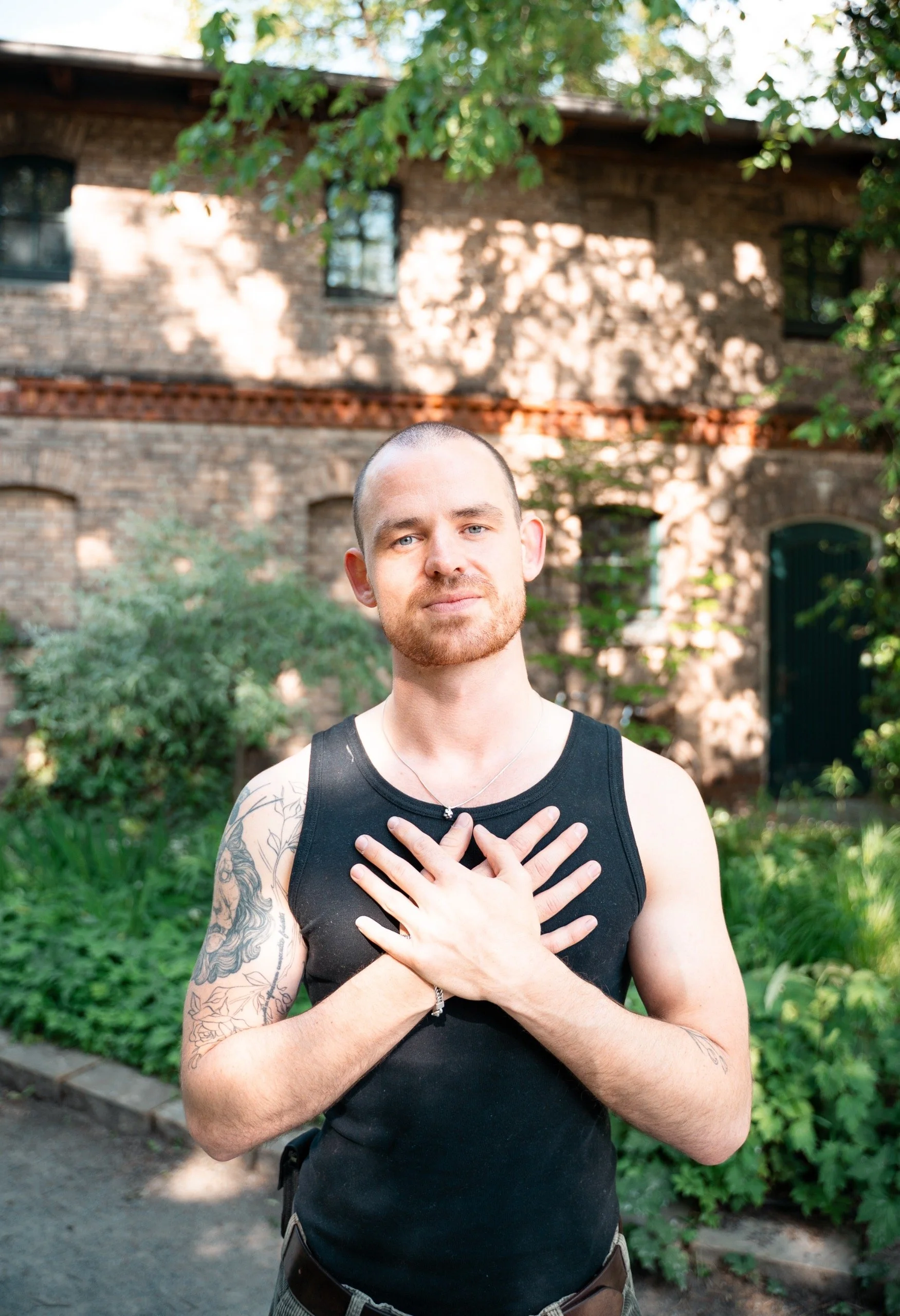
Leon aka Mufasa
Curious?
Send me your details and I will reach out to you.